Extra Credit is video series that examines topics related to history in the Thunder Bay District and exploring that history.
Thirty years is a long time for anything, and in this case, it is the amount of time I have spent researching and exploring parts of local history. When I started, I was a young university student looking for something to fill the time and for a little adventure. Now I’m a middle-aged guy with a family who has taken on the goal of trying to preserve some of the past for future generations. I have seen and done a lot in these past three decades and this is a little of that story.
The Gunflint and Lake Superior Railroad was a logging line operated by the Pigeon River Lumber Company from 1902 to 1909. It connected to the Canadian Northern Railway Duluth Extension/North Lake Subdivision (ex-Port Arthur, Duluth and Western Railway) at Milepost 79. It travelled six miles from the Ontario side of Gunflint Lake into Minnesota passing Crab and Whisker Lakes to near Topper Lake.
This video covers the Ontario portion of the line, from the junction with the Duluth Extension to Gunflint Lake, featuring numerous spikes, boundary markers and possible remains of the Canadian customs house.
This is the story of one of the most unusual rail lines in North America.
In 1902, the Pigeon River Lumber Company, a Wisconsin company based in Port Arthur (now Thunder Bay), Ontario, acquired some timber limits in Minnesota near the International Boundary. The company had been logging along the boundary further to the east near Lake Superior since its incorporation in 1900.
To facilitate the logging, a small railroad was built in Minnesota, eventually reaching 6 miles in length. It connected to the Canadian Northern Railway Duluth Extension (formerly the Port Arthur, Duluth and Western Railway), a line completed in 1893 with the intention of reaching Duluth, Minnesota and accessing iron deposits in the area, both of which failed. For seven years, until 1909, hundreds of thousands of logs were hauled the 80+ miles to the company’s sawmill in Port Arthur and thus created one of the most unique rail operations in North American history. A logging railroad, with no US terminus and only accessible through Canada, hauling logs cut in Minnesota across the border to be processed in an Ontario sawmill.
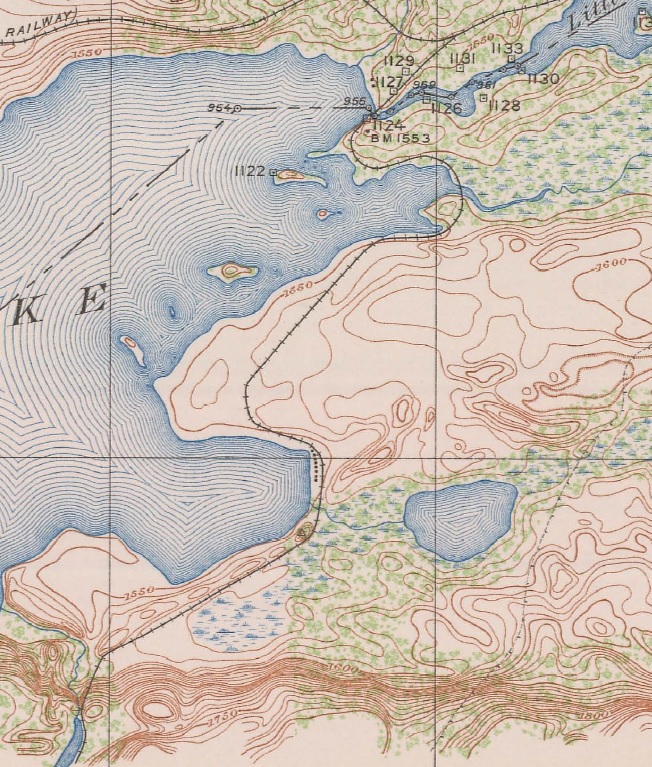
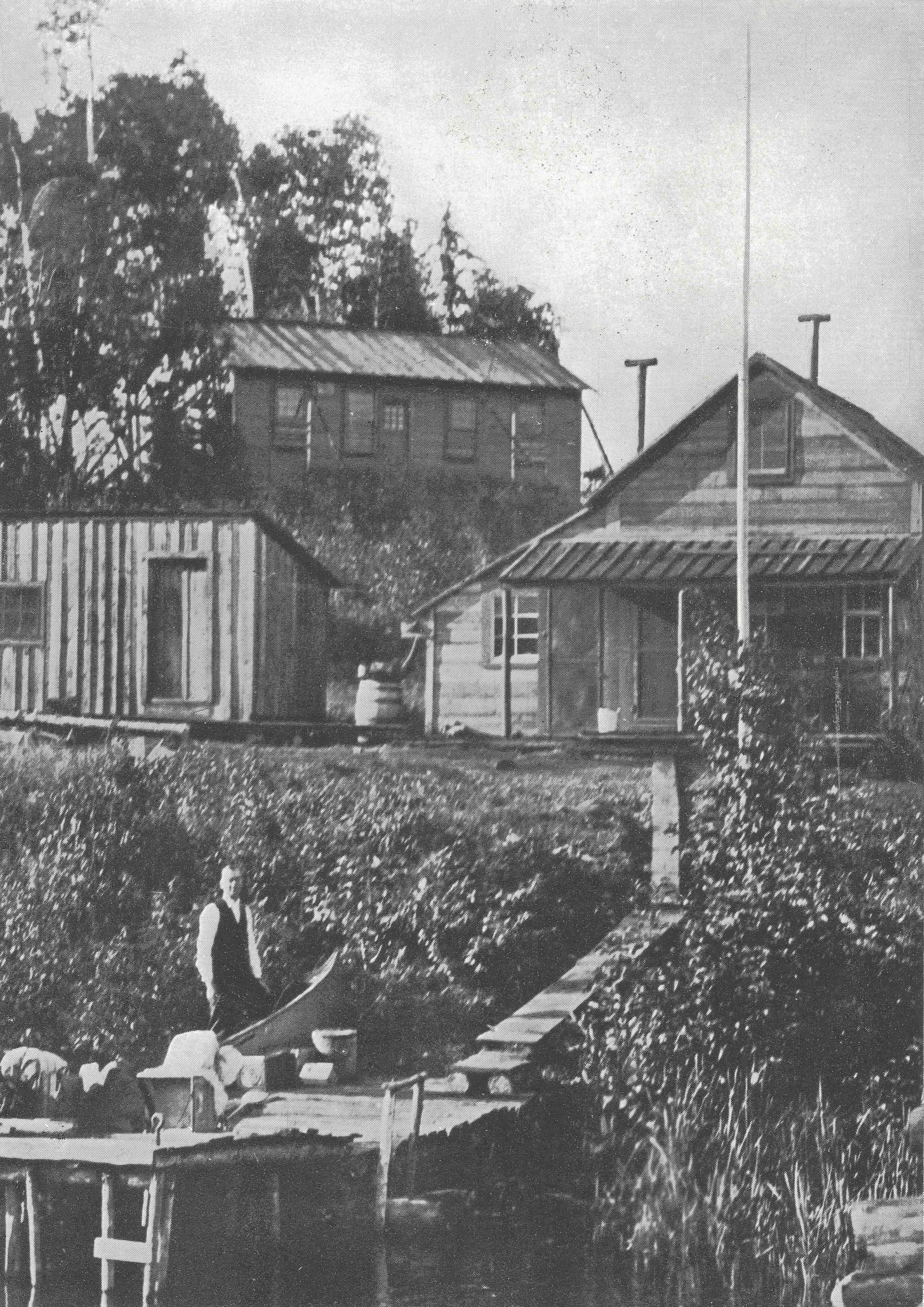
Sadly, there are no known photos of the railroad or logging operations. The International Boundary Commission map below shows the first two miles of the railroad down the east side of Gunflint Lake while the photo, taken by photographer George Shiras III, shows the American customs facilities approximately 10 years after the logging ceased.
This map shows the the route of the G & LS from the branch with the Duluth Extension to Crab Lake.US Customs House, circa 1919-1920 (G. Shiras III).
Extra Credit is video series that examines topics related to history in the Thunder Bay District and exploring that history.
We venture outdoors once again to trace the railway grade from just outside of the village of Rosslyn west to Stanley, Ontario. In this area the modern roadway known as Harstone Drive is built directly upon the old right of way, so we get a nice first person perspective of what it would have been like to travel this stretch. We pause to investigate an old ballast pit spur, then enjoy the beautiful views alongside the Kaministiquia River before stopping in Stanley for a walkabout at this once important railway station. Enjoy!
One hundred and twenty years ago tomorrow, the Gunflint and Lake Superior Railroad (G&LS) was incorporated in the State of Minnesota. Owned by the Pigeon River Lumber Company, a Wisconsin business headquartered in Port Arthur (Thunder Bay), Ontario, the logging line was built to harvest timber along the southwest shore of Gunflint Lake and adjacent areas in the northeast part of the state.
The G&LS was in operation between 1902 and 1909 and branched off the Canadian Northern Railway Duluth Extension (originally the Port Arthur, Duluth & Western) at Milepost 79. It was likely the most unusual railroad in all of North America as it was an American line, but had no terminus in the US and its only access was via Canada. All the timber harvested in Minnesota was shipped to the company’s mill in Port Arthur for processing.
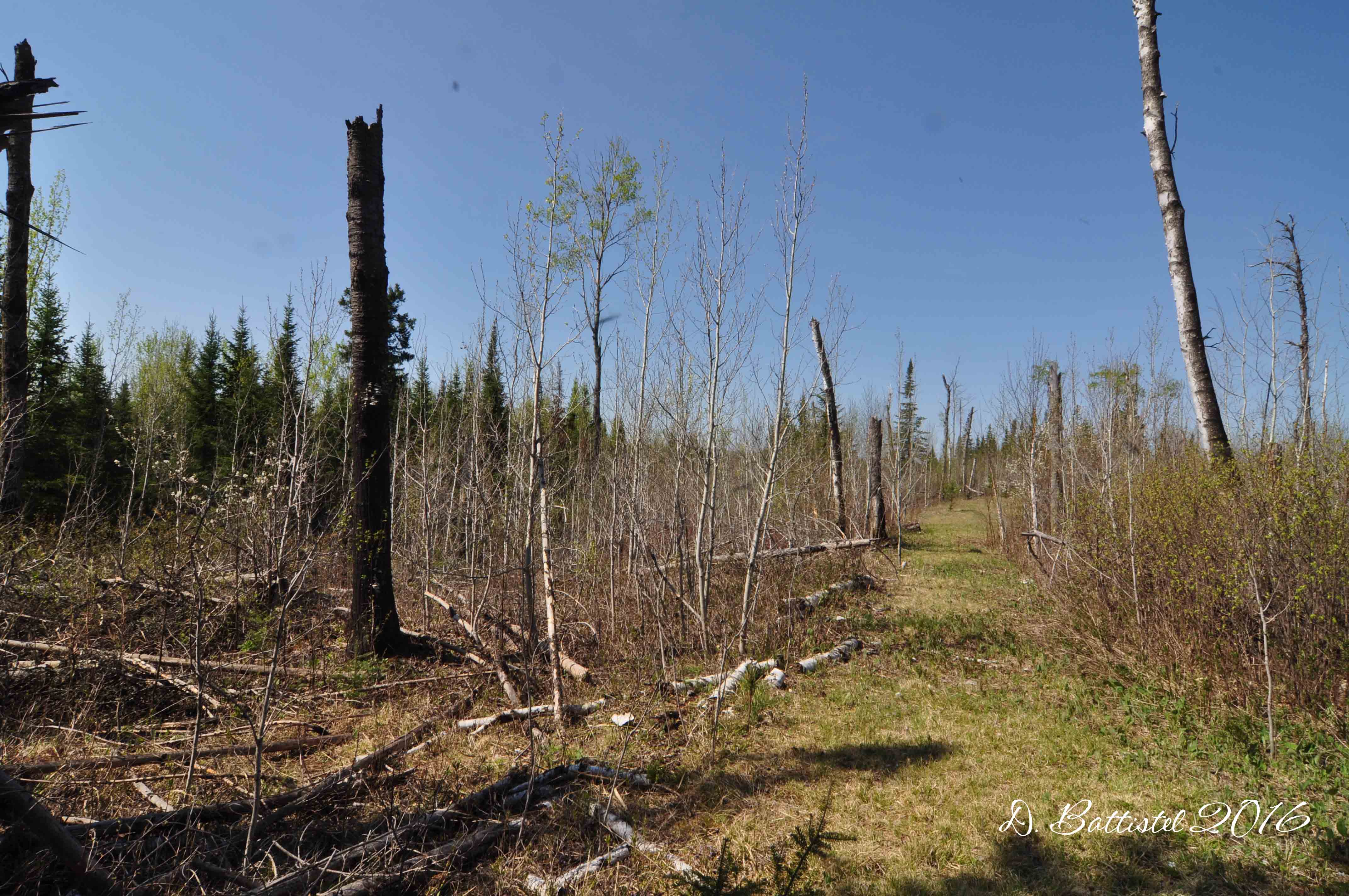
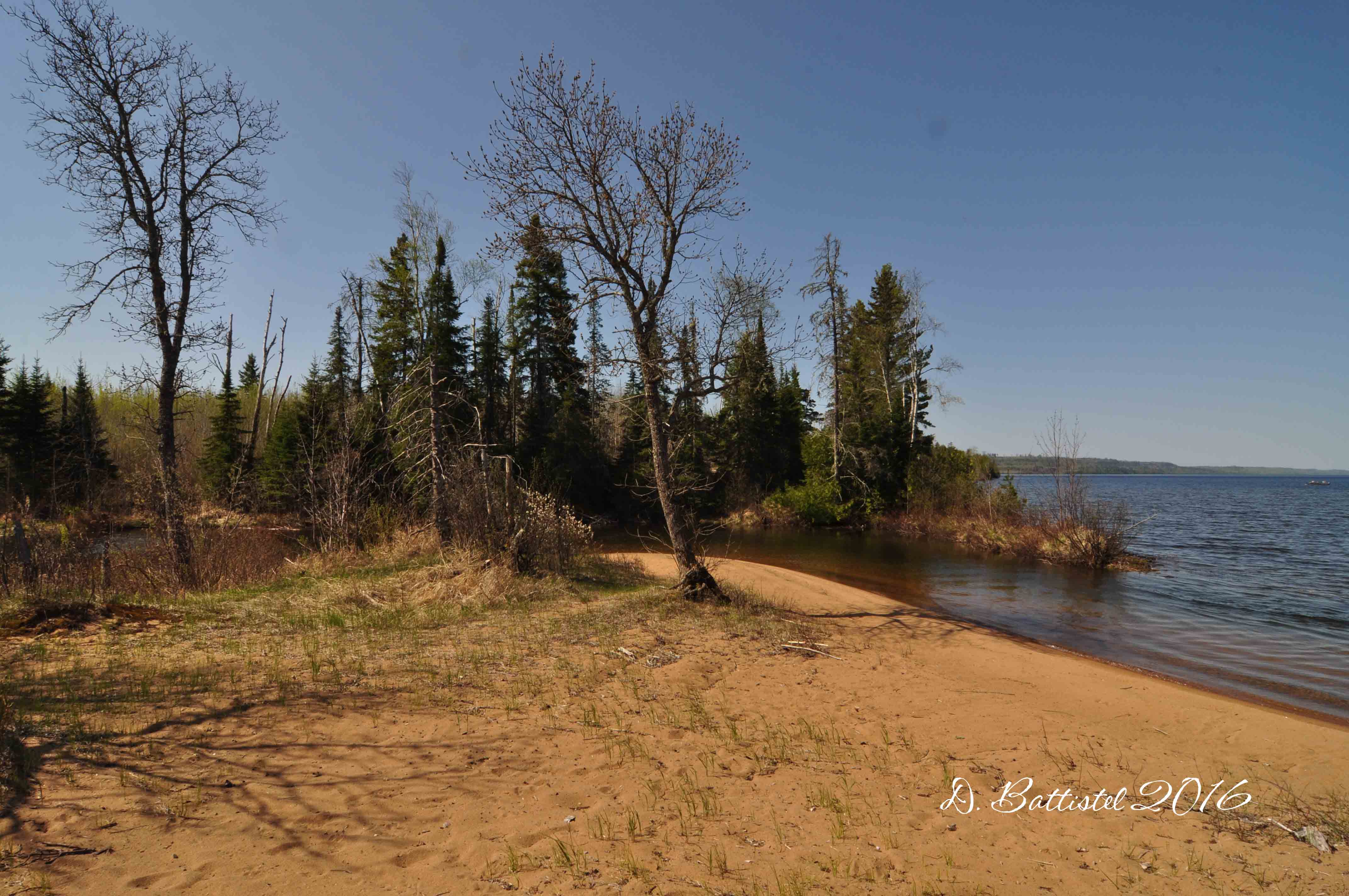
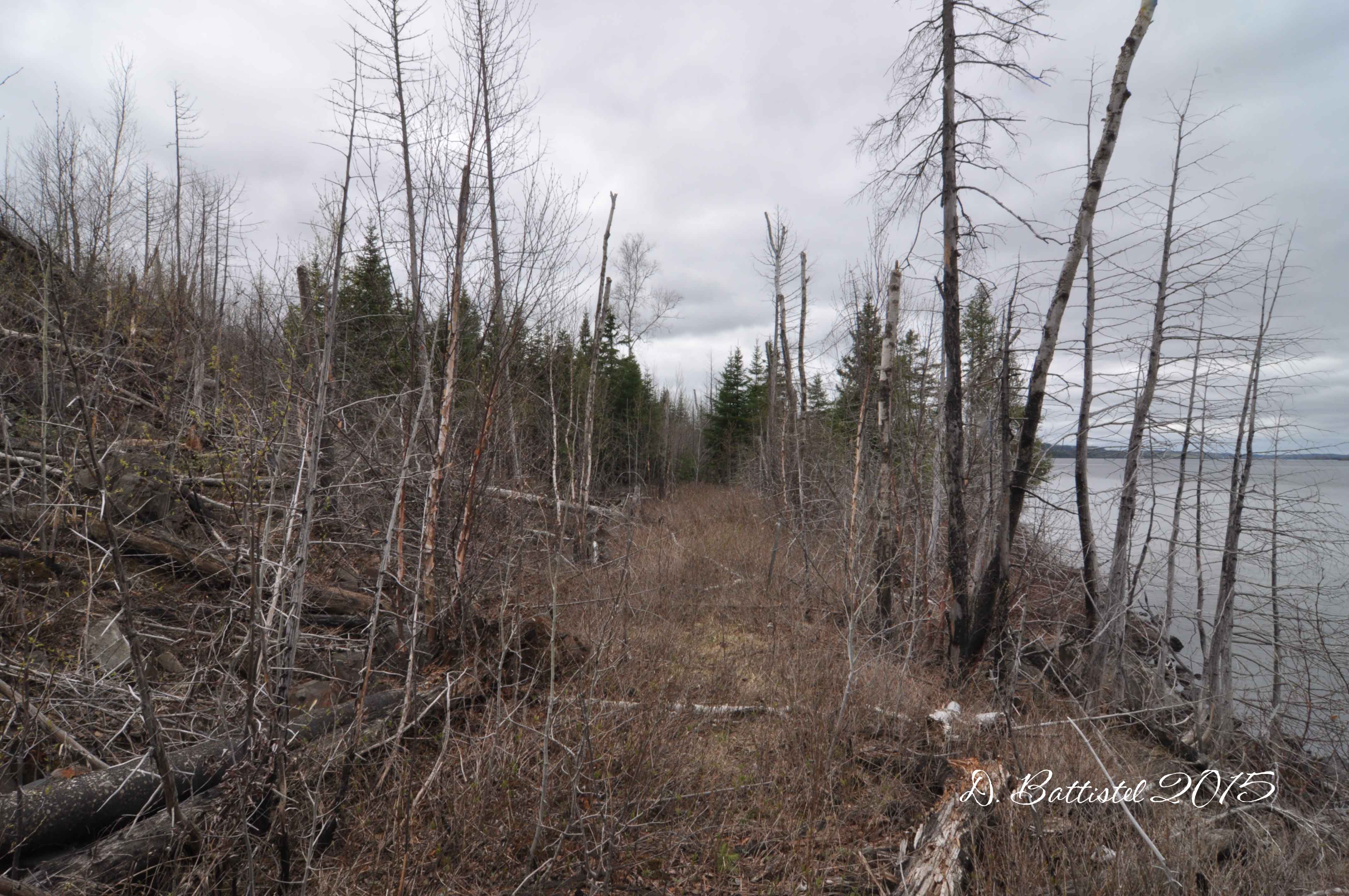
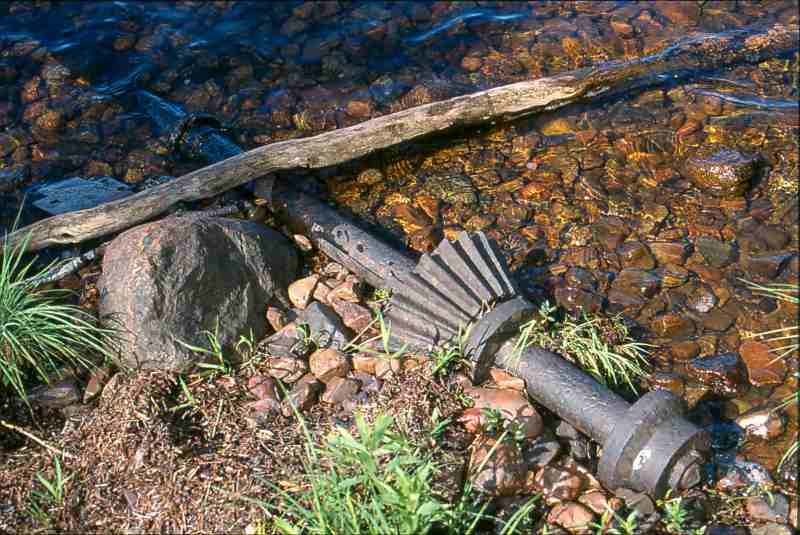
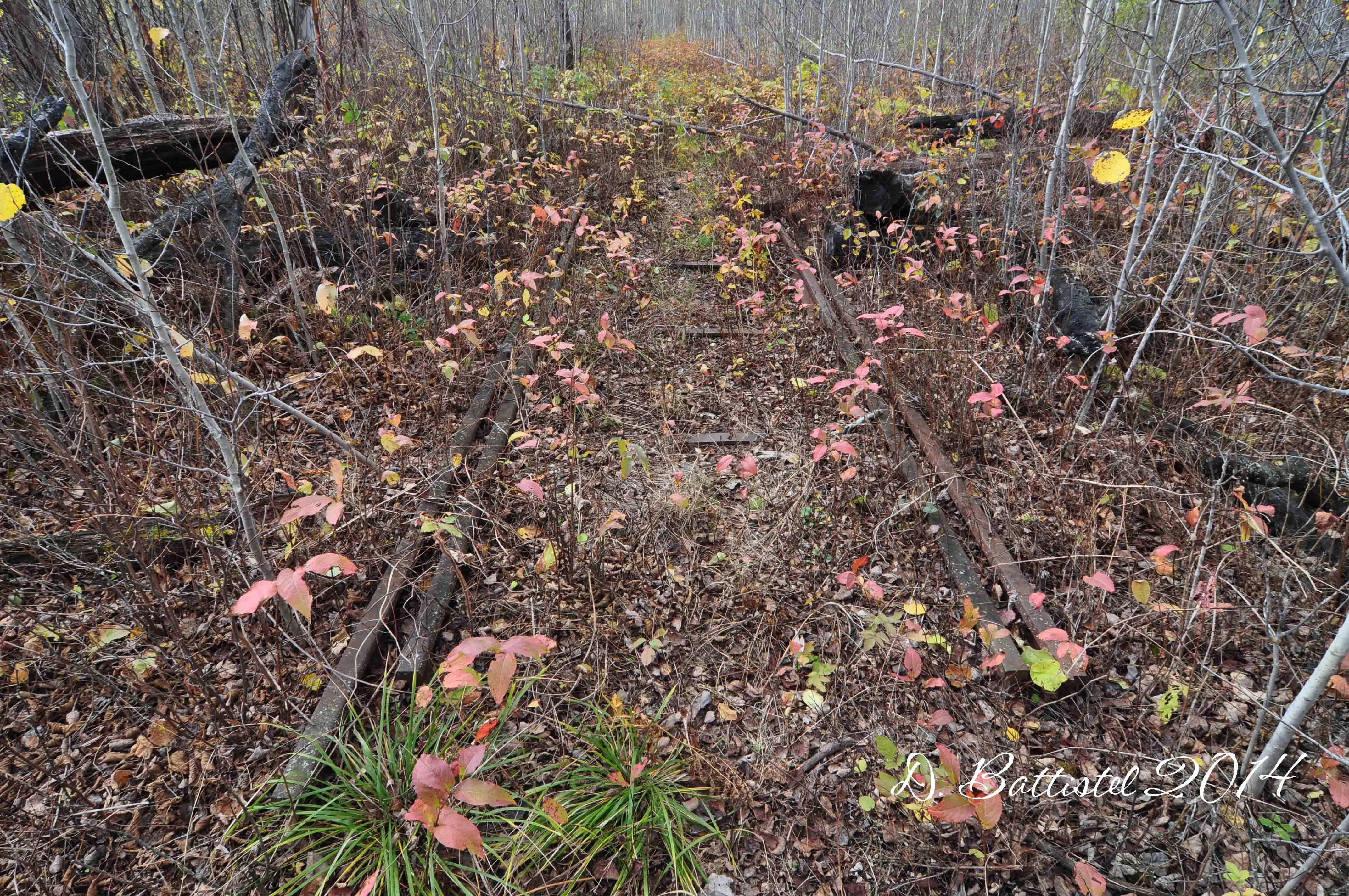
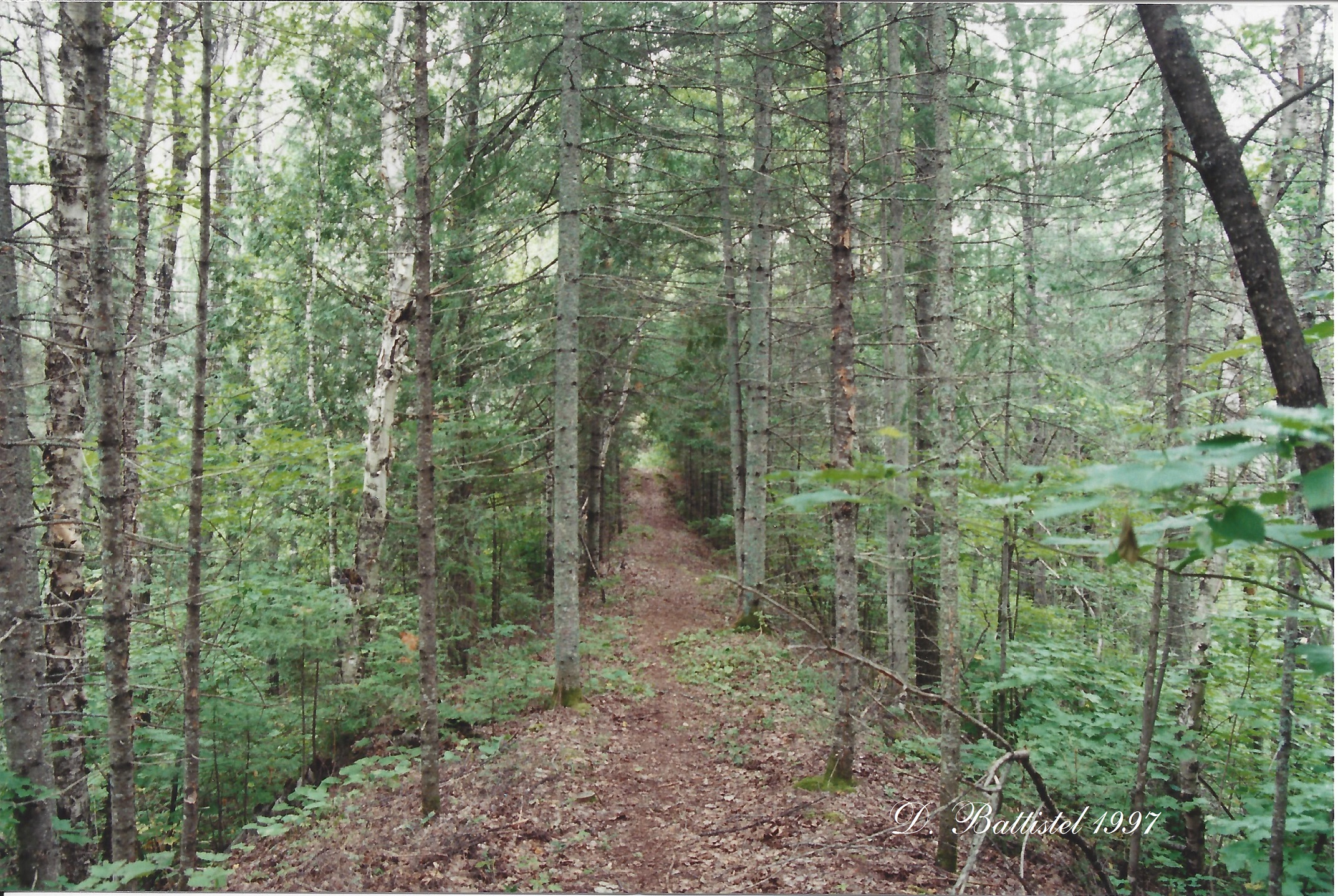
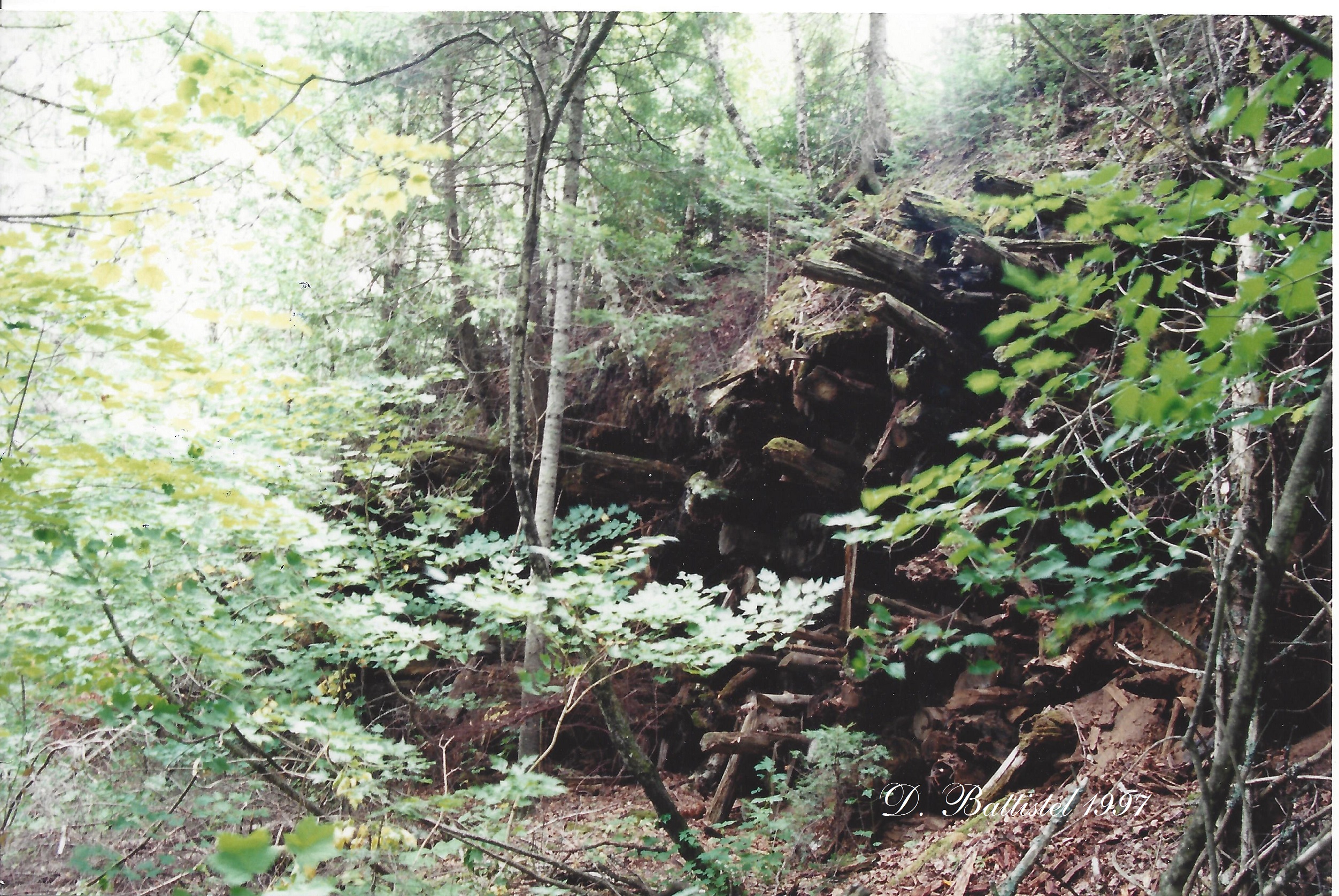
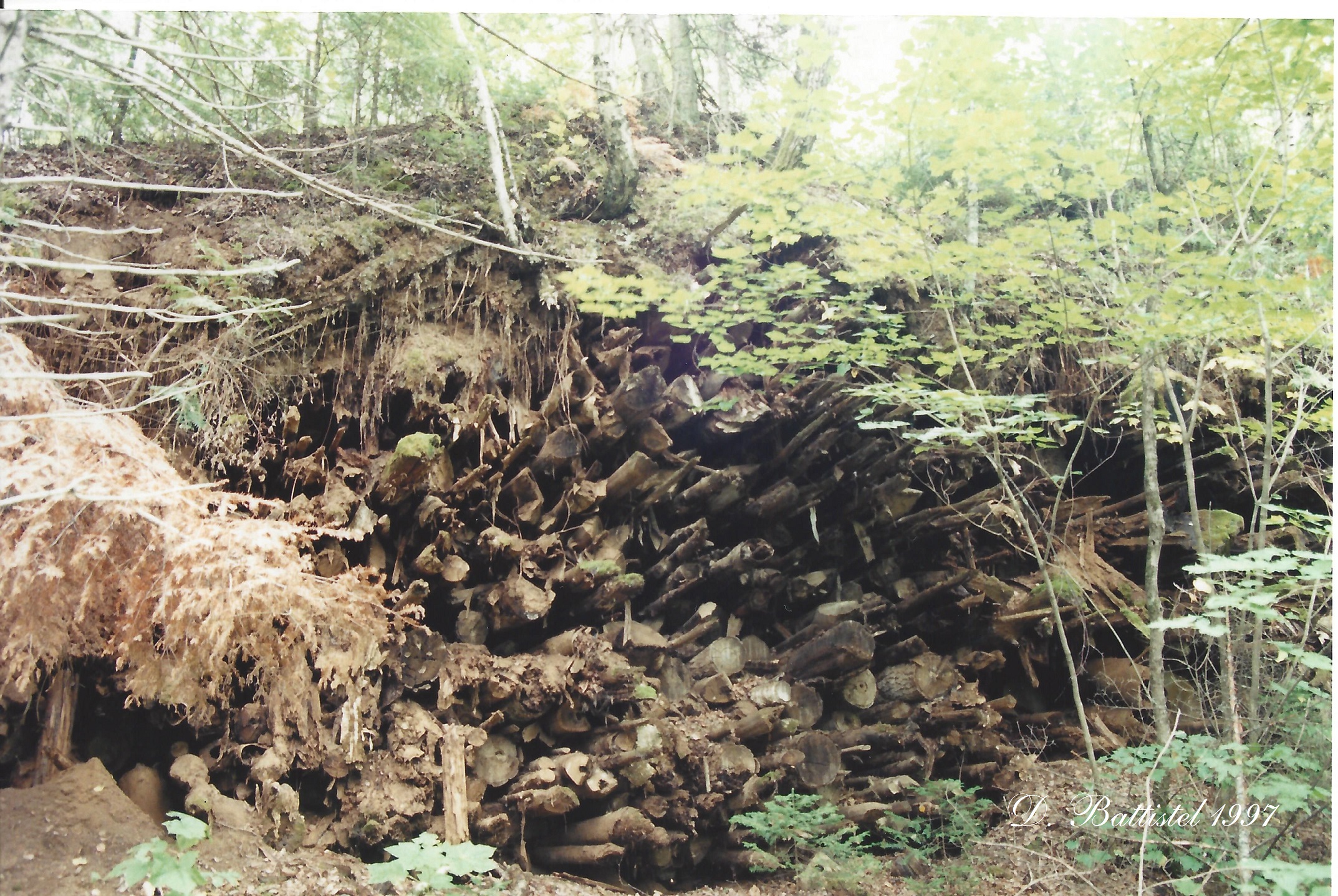
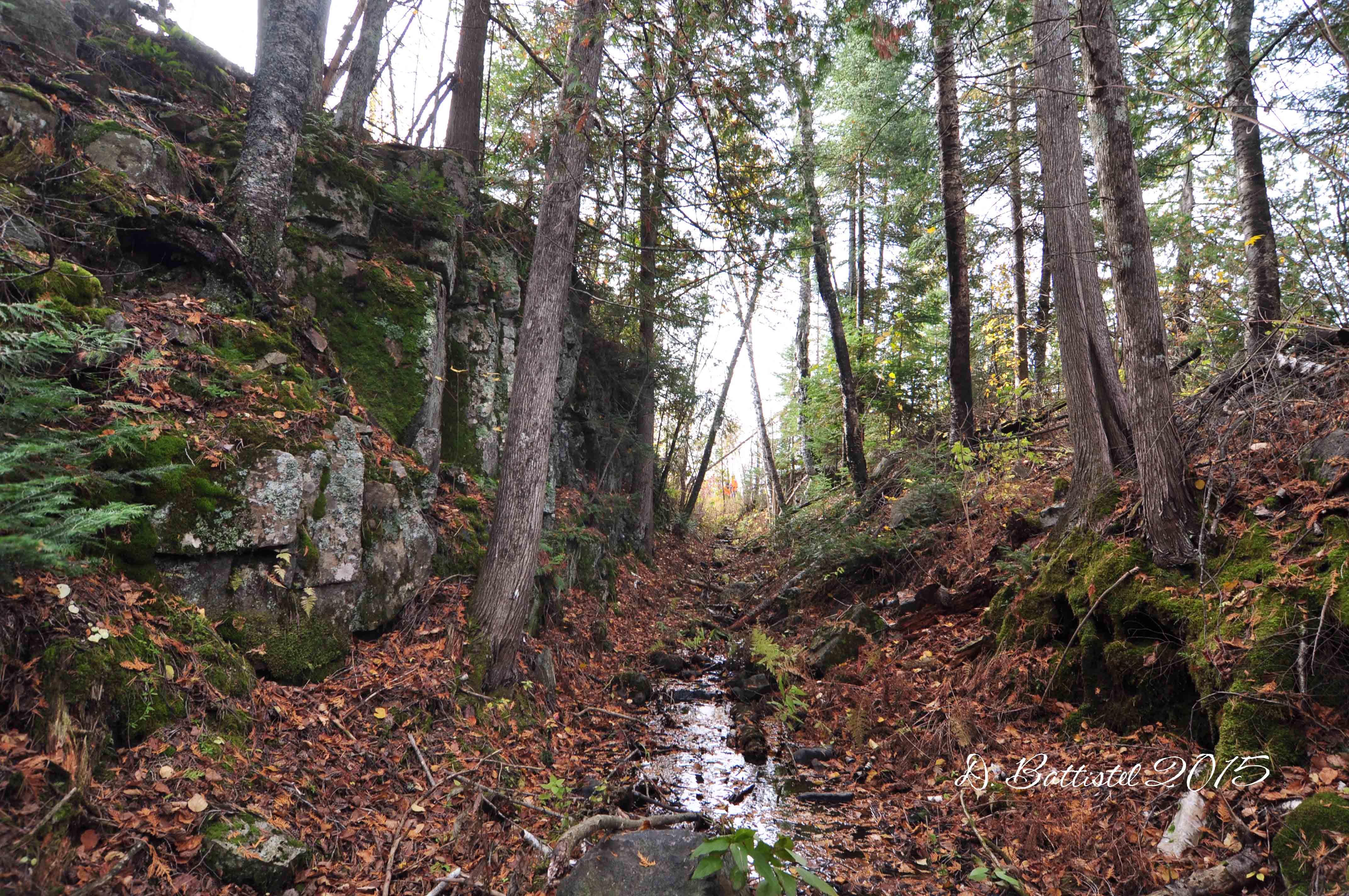
Today there are vestiges of the line still visible, but they are rapidly disappearing. The photos, taken between 1997 and 2016, along with the map (which shows the area in 1911), covers the initial few miles of the line as passes from Ontario across the international boundary into Minnesota. Corduroyed logs, some rails and even a line shaft from a Shay locomotive litter the route. The most amazing remnant of the line was a massive corduroyed log trestle on the south shore of the lake beside the Crab River, which helped it climb the massive ridges in the area. Unfortunately the trestle was burned in a 2007 fire and the following winter the Forest Service was forced to dynamite it to extinguish the smoldering embers inside.
PAD&W-G&LS junction, May 2016.G&LS International Crossing, May 2016.G&LS Grade, May 2015.Corduroyed logs, October 2015.Shay 683 rear line shaft, Gunflint Lake, July 2000.Rails, Gunflint Lake, October 2014.Corduroy Trestle, August 1997.Corduroy Trestle, August 1997.Corduroy Trestle, August 1997.This map shows the the route of the G & LS from the branch with the Duluth Extension to Crab Lake.G&LS rock cut, October 2015.
Then and now photos featuring Iron Range Hill west of Thunder Bay, ON. In the first photo, a 2-6-0 Mogul of the Canadian Northern Railway (either 107 or 108), is stuck in the snow on the hill sometime in late 1915 or early 1916. The railway was built as the Port Arthur, Duluth and Western in 1893, but at the time was known as the Canadian Northern Railway North Lake Subdivision.
Iron Range Hill, located between Mileposts 59 and 60.5, was the steepest grade on the line at nearly 2 percent. It can be found southwest of Thunder Bay between Sandstone Lake (known as Sand Lake at the time) and Iron Range Lake. Brakeman Jack Lalonde leans against the stack, while passenger J.T. Greer is the middle of the three men standing beside the boiler. Greer is headed to the station at North Lake (MP 71), from where he will proceed to his logging operation further west on the lake.
Today the hill is much quieter (photo taken March 2020). The North Lake Subdivision eventually became part of the Canadian National Railways network and in 1923 this section of line (Mackies to North Lake) was take out of service. The rest of the subdivision was abandoned by CNR in October 1938 and the rails pulled up in 1939.
Picture courtesy of Mary Wilson.
Stuck in the snow, Iron Range Hill, 1915-1916. (M. Wilson)Iron Range Hill, 2020.
Extra Credit is video series that examines topics related to history in the Thunder Bay District and exploring that history.
I always get a lot of questions about my explorations and local history. Over the years I have had some unforgettable experiences while hiking, so this episode is all about the best and worst moments.
An unidentified Canadian National Railways locomotive, possibly 1059, moves somewhere on the North Lake Subdivision likely during the 1930s. Originally built as the Port Arthur, Duluth and Western Railway and opened for traffic in 1893, the line later became part of Canadian Northern Railway (CNoR) network. In late 1918, CNoR was merged into the Canadian National Railways (CNR).
Locomotive 1059, a 4-6-0 engine (G-10-b classification), was one of 25 built for CNoR in 1903 by the Canadian Locomotive Company. She likely began running on the North Lake line in the late 1920s until it was abandoned in 1938.
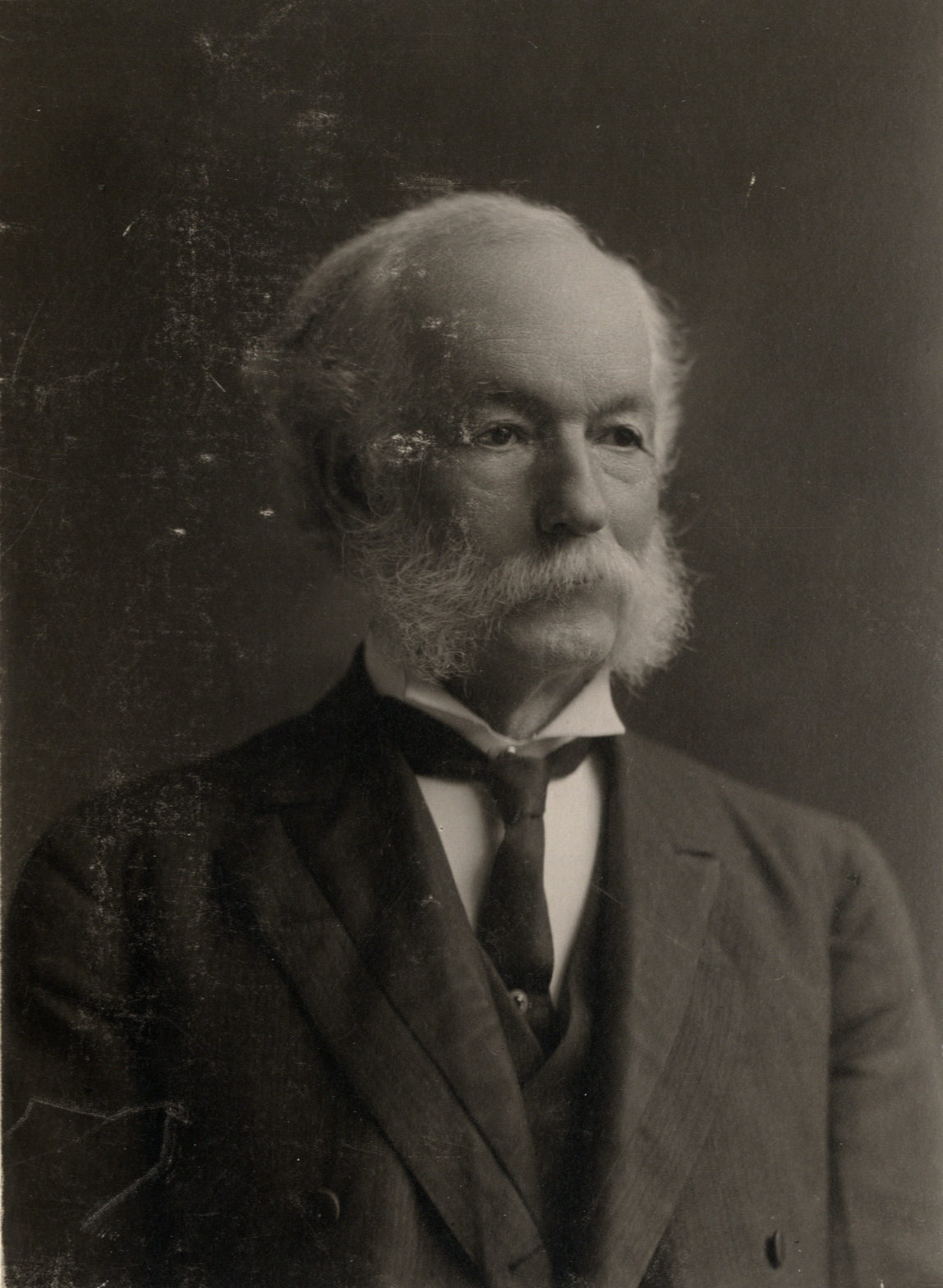
William Rees Brock, president of the Port Arthur, Duluth and Western Railway when it officially opened in June 1893. Born in Eramosa Township, Upper Canada in 1836, Brock was a well known and well connected businessman in Toronto at the time. His company, W.R. Brock Company Limited, was one of the largest dry goods retailers in the city.
It is unknown how Brock became associated with the PAD&W as his name does appear in any railway records or newspaper reports until his election as president. It is assumed that his position on the Board of Directors of the Toronto General Trusts Company (which was managing the estate of a deceased investor) and his connections to the Bank Commerce (which had loaned the company a considerable amount of money) was the catalyst for his election, with those companies attempting to secure their interests in the line. Brock remained the president until the company was dissolved following its purchase by Mackenzie, Mann and Company and later incorporation into the Canadian Northern Railway Company.
Extra Credit is video series that examines topics related to history in the Thunder Bay District and exploring that history.
This episode is a follow up to our first video on the Pee Dee Railway (a link to which you can find below). We venture outdoors to visit remains of the railway a short distance west of Thunder Bay in Rosslyn, ON. You will see some rails that are still in place (not original though) and a few spots where significant points were once located.



 Poverty, Agony, Distress & Want!