Video of the former Canadian Northern Railway/CN-Kinghorn (Dorion) Subdivision (MP 71.8-75.4) south of Beardmore, ON. Features the grade as it parallels the Blackwater River just east of Warneford Station with culverts and rock cuts. Also features a 1946 diversion of the grade which saw a 0.5 mile section of line shifted from the north bank of the river to the south bank and two trestles removed. Many thanks to Jeff Smith who provided the information to locate this forgotten section of grade. *Be sure to watch this segment of the episode where you will see the realignment from the air via drone: https://youtu.be/-NalpgEiUw4
Video of the former Canadian Northern Railway/CN-Kinghorn (Dorion) Subdivision (MP 71.8-75.4) south of Beardmore, ON. Features the grade as it parallels the Blackwater River with rock cuts, a milepost marker, a concrete culvert, old ballast pits and the remnants of a massive 1999 forest fire.
Video of the former Canadian Northern Railway/CN-Kinghorn (Dorion) Subdivision (MP 71.8-75.4) south of Beardmore, ON. Features the grade as it parallels the Blackwater River with rock cuts, a milepost marker, a concrete culvert, the sites of logging spurs/flags stops and the remnants of a massive 1999 forest fire.
Video of the former Canadian Northern Railway/CN-Kinghorn (Dorion) Subdivision (MP 71.8-75.4) south of Beardmore, ON. Features the grade as it parallels Highway 11 and the Blackwater River with rock cuts, telegraph poles, a milepost marker, a concrete culvert and the remains of logging spurs.
Remember when you were a kid and time seemed to stretch on forever? The school year took eons to get through and summer vacation lasted an eternity? I certainly recall those days. I don’t think it’s just me, since other people say the same thing, but doesn’t it feel like time goes faster the older you get? The school year flies by and a two-week break disappears in two days. Sometimes it makes you wish you were a kid again.
Hey kids, I’m finally back. I know, I don’t write as often as I should; in fact, I don’t remember the last time I wrote a post. I think it may have been last April. In any case, it was a long time ago. It’s now 2024, and yet another year has flown by. As you can guess by the title, or maybe you didn’t, I recently celebrated my 50th birthday. I’m happy I made in through 2023 relatively healthy, but turning 50 isn’t that exciting. In fact, if I’m being honest, it’s a bit depressing…I’m getting old. I really don’t feel 50 mentally, maybe physically some days, but it’s hard to believe I’ve made it through a half century on the planet. Good for me!
Things have been busy as usual. We’re heading back to school in a couple days after a nice break, which as I already alluded to went by way too fast. It was good to get away from the grind for a bit though. When things start up again on Monday, we only have two and a half weeks before we move into exams. Then it will a new semester, which means that we’re on the downward slide toward summer. It’s hard to believe but I have now, fingers crossed, moved into the last bunch of years of my teaching career. Back in November I completed my 26th year in the classroom…that really makes me feel old!
So, it’s now January and we’re smack in the middle of winter. It really doesn’t feel like it though. In fact, the weather has been downright bizarre. It was a super dry fall and that trend has continued into the winter. We are well below our normal snowfall, with only a few centimetres on the ground, which just fell right before New Years (yes, we had a brown or green Christmas, or whatever you want to call it). We are getting some snow today though. The temperatures likewise have been off the charts, as it only has been “cold” the last week. It was +14C one day in mid-December and Christmas Day was +8C. People are blaming things on El Nino, but I’m sure there is some climate change at work as well.
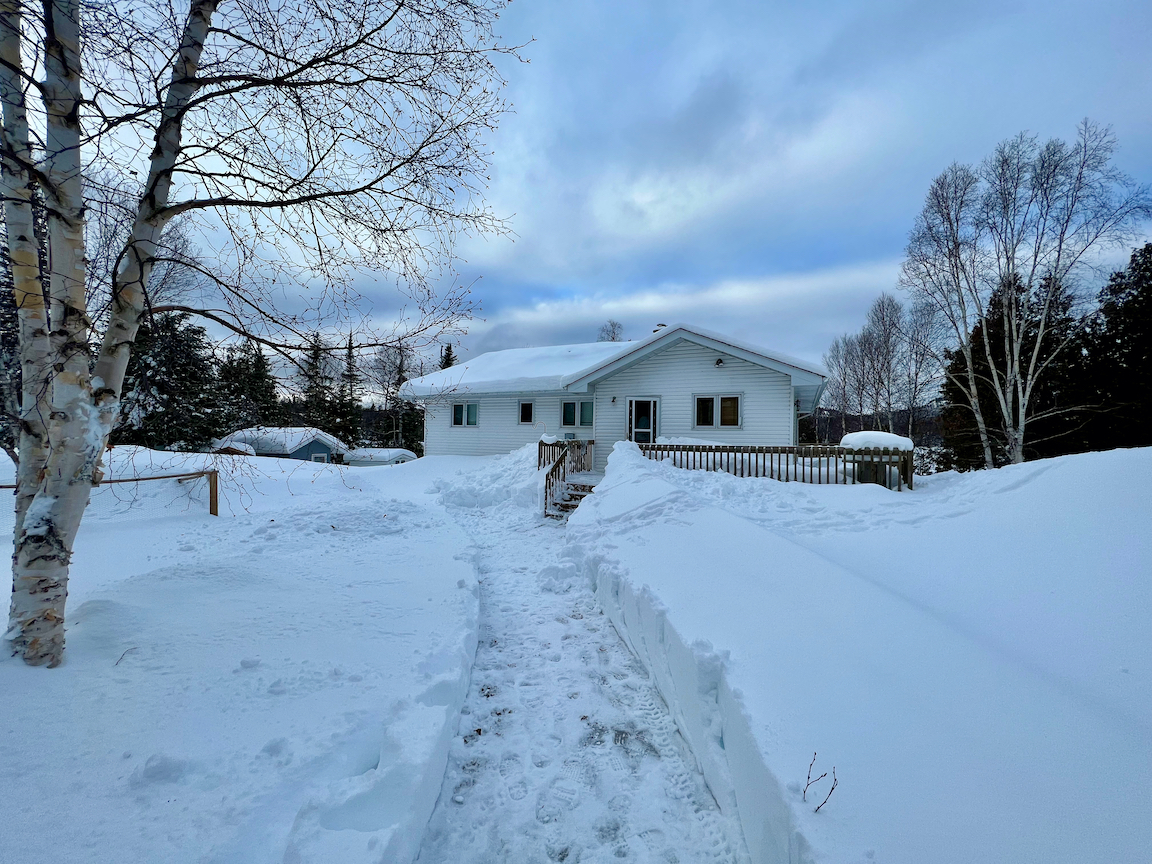
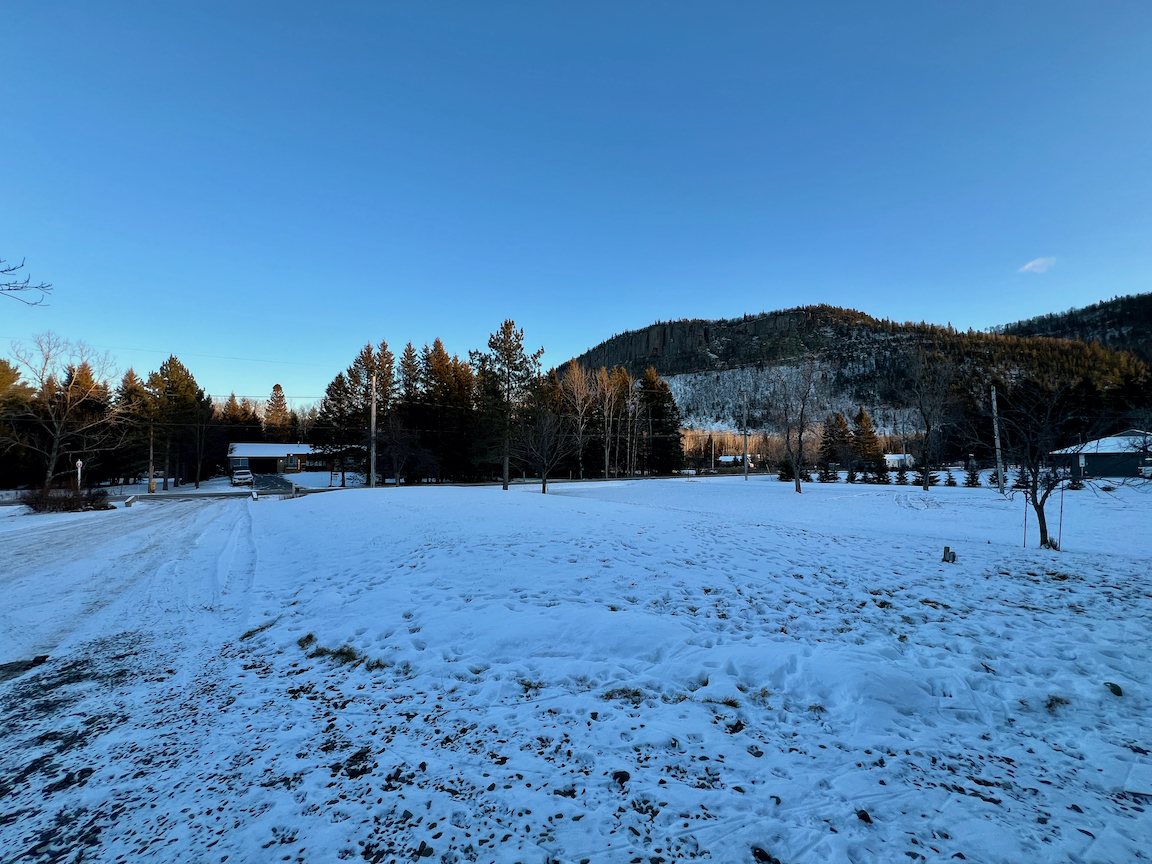
December 2022.December 2023.Camp, December 2022Camp, December 2023.Camp, December 2023.January 2024.
I am currently in the quiet season for my railway work if you haven’t noticed. This is the time of year that I get around to posting all of the videos I did back in the spring and the fall. I am also trying, “trying” being the key word, to finish off my book on the Pigeon River Lumber Company and the Gunflint and Lake Superior Railroad. I actually need to look at some of that material in the coming weeks while we are locked inside away from the cold. I did make arrangements to complete one of the pieces of research I need for the book. Hopefully, if things work out okay, I’ll be heading down to Gunflint in May to meet up with the archaeologists from the Superior National Forest to explore the remains of the logging camp (Camp 8) that I found back in 2017. This was supposed to have been done back in October 2019, but a freak snowstorm ruined those plans and then the pandemic hit. I can’t believe it will have been five years since I was last down in that area.
My work on the Kinghorn line continues unabated though. There is always something to do with that project, whether it be updating information on my website, fiddling with GPS data or planning for the upcoming season of exploring. Since I completed hiking the entire line back in August 2022, I have now committed to redoing most of the sections of the line to improve the information in the video series I have put together. It is a time-consuming process and does generate a bit of stress, since I try to get as much work in as I can during the early spring and mid fall when the leaves are down and things are more visible. Hopefully I will have most of the sections redone by this fall so I can just concentrate on more specific areas.
Anyway, it’s time to move along. I can’t promise I’ll be back soon because I know that will be a lie. Let’s just say I’ll be back with more updates at some point down the road. Until then…
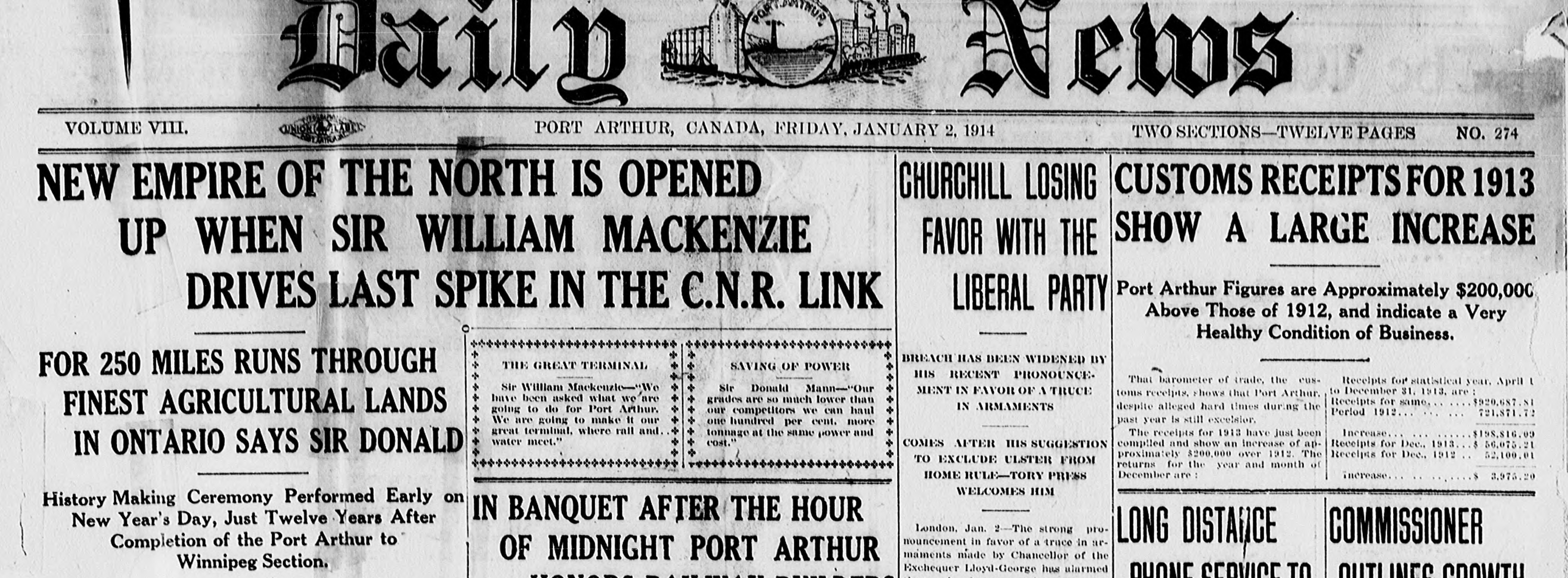
Happy New Year! Welcome to a very special Feature Friday.
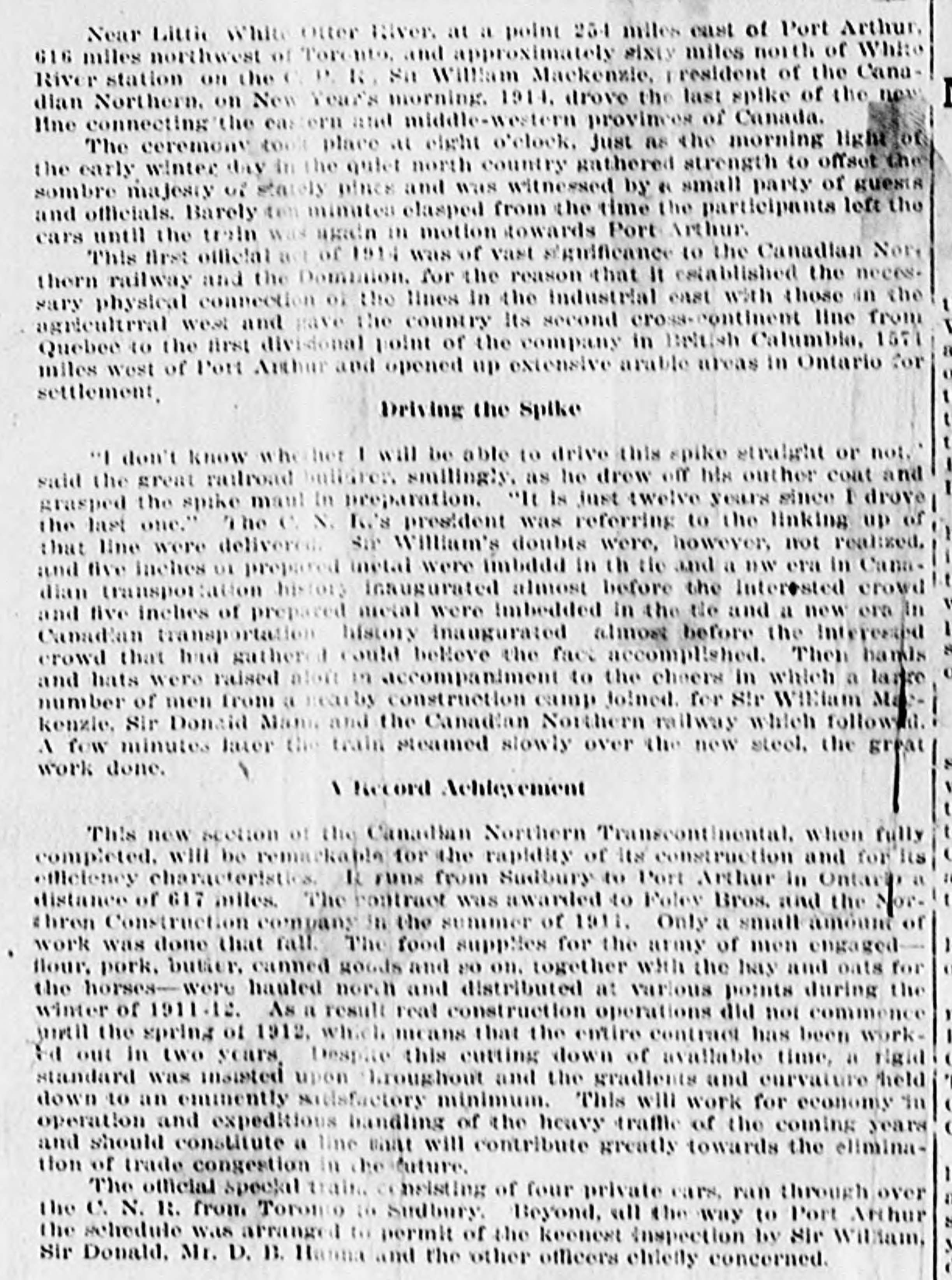
On this day 110 years ago, the last spike was driven on the Canadian Northern Railway (CNoR) line between Sudbury and Port Arthur (Thunder Bay), Ontario. CNoR President William Mackenzie did the honours at 8am near the Little White Otter River, some 250 miles east of Port Arthur. The completion of these 550 miles of track between the end of steel at Ruel outside of Sudbury and Port Arthur was one of the final pieces in the building of Canadian Northern’s transcontinental network. It would take until October of 1915 for it to be fully opened to passenger traffic.
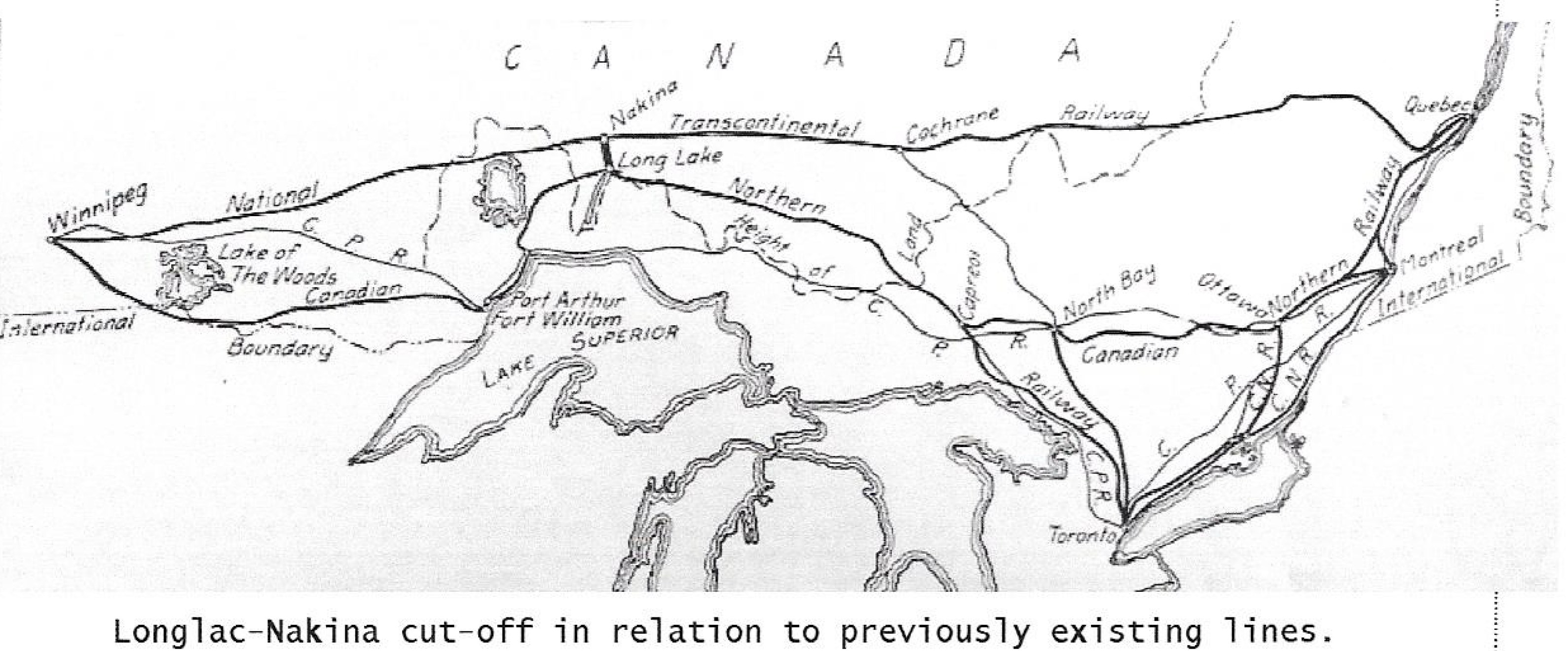
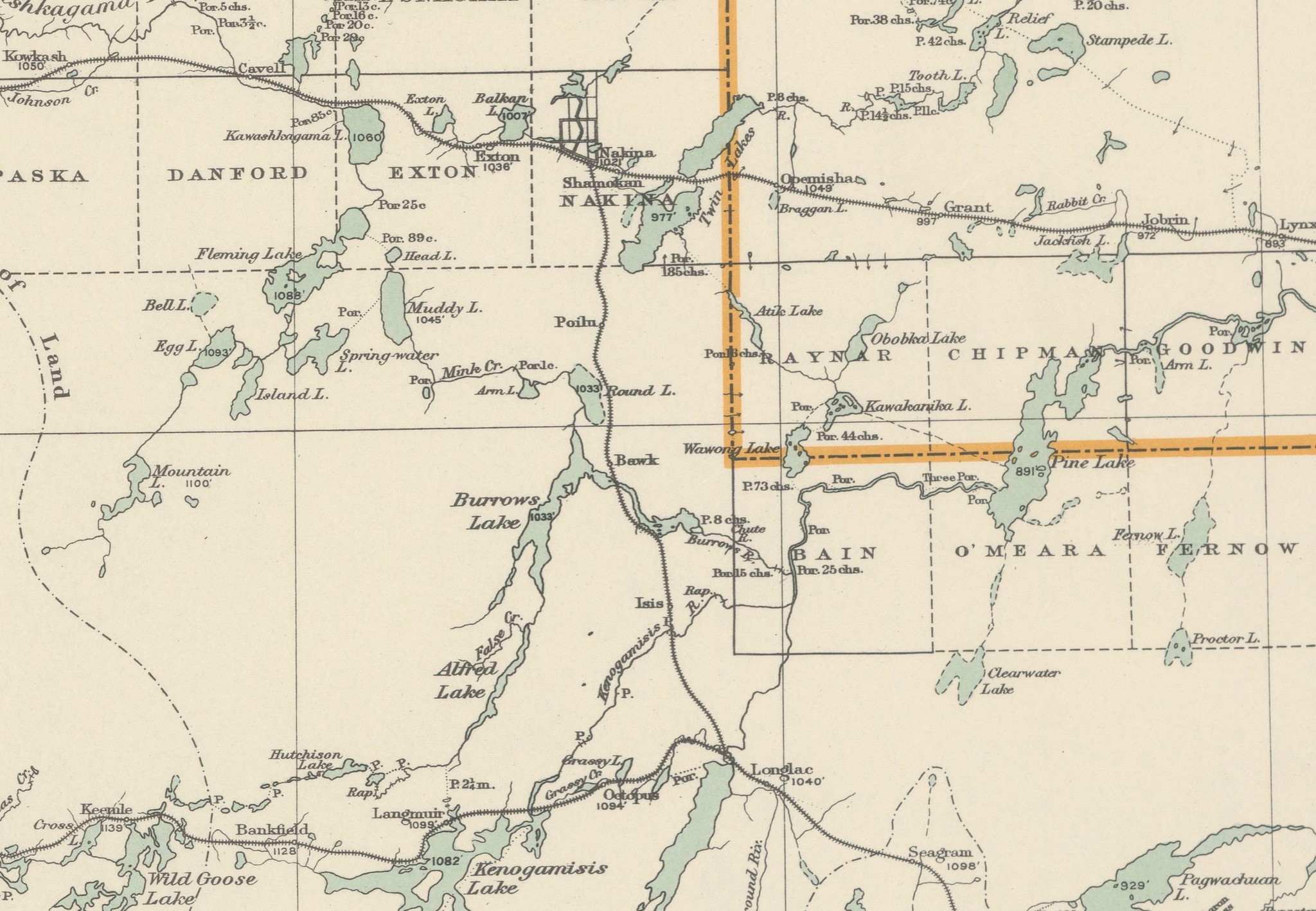
Unfortunately, only about two-thirds of this line is still active. The Canadian Northern company became insolvent not long after its transcontinental route was completed and was eventually taken over by the Canadian government and merged into the Canadian National Railways (CNR). In 1923, CNR completed the Nakina Cut-off, a 30-mile connection which joined the former CNoR line at Longuelac/Longlac with the more northerly National Transcontinental Railway at Nakina. This cut-off shortened the route between Toronto and Winnipeg by nearly 100 miles.
Everything on the old Canadian Northern line west of Longlac was no longer on the mainline and became a secondary line. From 1924 to 1960, it operated as two separate subdivisions, the Kinghorn and the Dorion. In 1960, CN merged the two into one subdivision, the Kinghorn, running 195 miles from Longlac to Port Arthur. The Kinghorn was decommissioned in 2005 and the rails were removed a few years later.
Did you know that 100 years ago the railway landscape of northern Ontario was dramatically changed by the construction of a single 30-mile piece of track?
In 1919, Canadian National Railways (CNR) came into existence through the government ordered merger of Canadian Northern Railway, the Canadian Government Railways and other bankrupt lines (the nationalization process would take until 1923 to complete). One of the immediate tasks for the new company under the direction of D.B. Hanna was the rationalization of the often-duplicated lines in its new network. One such area was north of Lake Superior. Challenging geography, namely a large body of water aptly named Long Lake, had brought the former Canadian Northern Railway and National Transcontinental Railway within 30 miles of each other near the railway stations of Longuelac/Longlac (CNoR) and Nakina (NTR).
Studies as early as 1917 had suggested that linking the two lines would reduce travel distances between Toronto and Winnipeg by 100 miles. Additionally, the grades would be better as it would eliminate the decent to Lake Superior at Port Arthur and subsequent ascent westward. Surveys were conducted in 1919 and 1922 and construction was authorized in December 1922. The contract was awarded to the Foley Brothers and Hervey (the Foleys built the Canadian Northern line through the area in 1911-1914) and the work was completed by December 1923.
The impact of the cut-off was immediate and profound. Mainline trains would now follow the old Canadian Northern route to Longlac, thence to Nakina and on the old National Transcontinental route to Winnipeg. The annual savings to the railway were estimated to be in the hundreds of thousands of dollars. There were casualties with this decision, however. The NTR line from Nakina eastward to Hearst now lost much of its traffic. Eventually renamed the CNR Pagwa Subdivison, most of the line was abandoned in 1986. Likewise, traffic diminished greatly on the former CNoR line west of Longlac to Port Arthur. Renamed the Kinghorn and Dorion Subdivisions respectively, they were merged into one line, the Kinghorn, in 1960. It managed to sustain traffic until 2005 when it was decommissioned by CN.
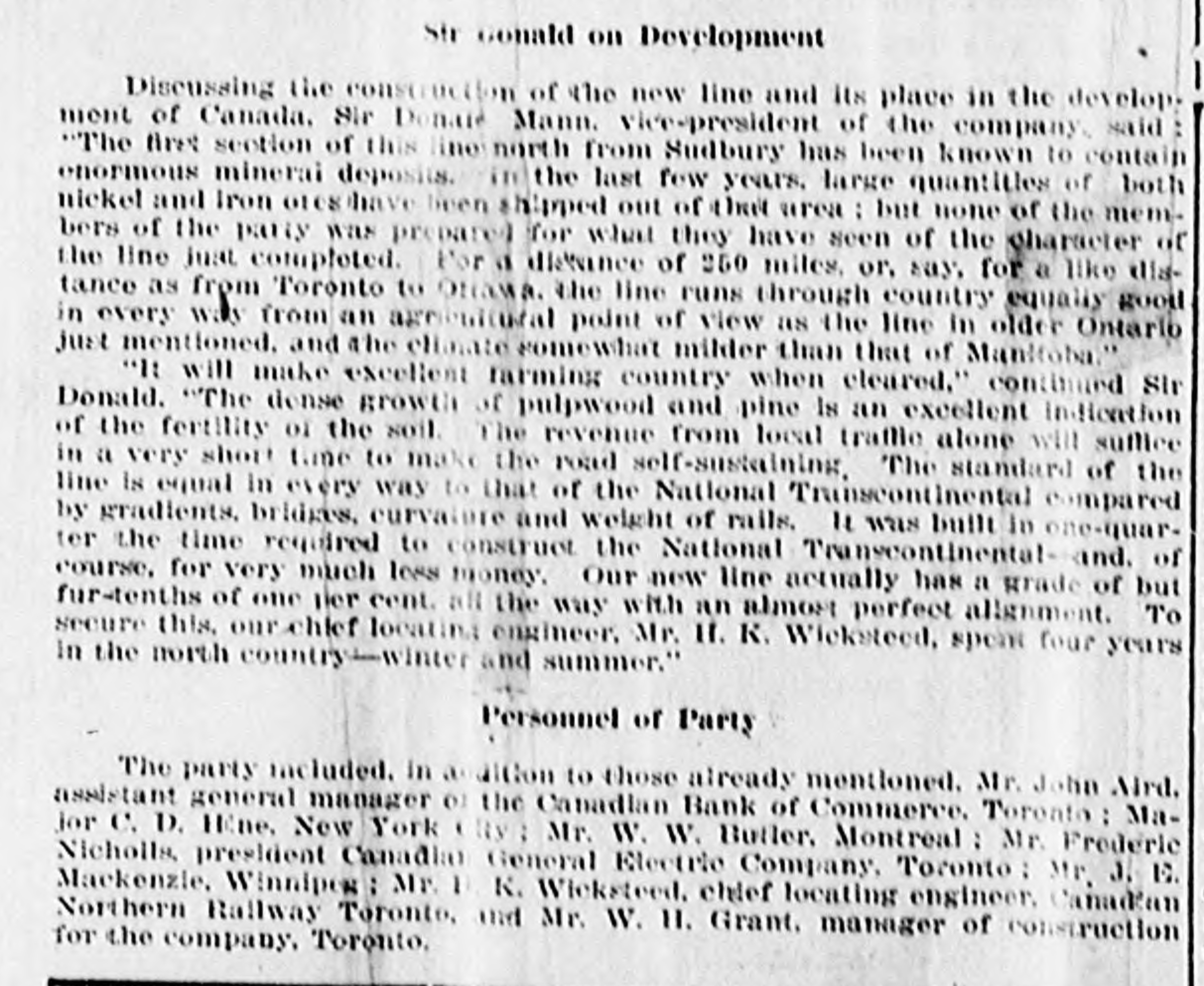
Images from Canadian Railway and Marine World, January 1924 and Lake Nipigon Sheet, Department of the Interior Map 1927.
Video of the former Canadian Northern Railway/CN-Kinghorn (Dorion) Subdivision (MP 52.7-57.5) west of Nezah, ON. Features the grade as it parallels the Blackwater River with milepost markers, cuttings, crossing and old spurs.
Video of the former Canadian Northern Railway/CN-Kinghorn (Dorion) Subdivision (MP 52.7-57.5) west of Nezah, ON. Features the grade as it parallels Nezah Lake and the Blackwater River with telegraph poles, milepost markers and a very rare, well preserved wooden box culvert.
Video of the former Canadian Northern Railway/CN-Kinghorn (Dorion) Subdivision (MP 52.7-57.5) at Nezah, ON. Features the remains of the station and siding at Nezah with crossings, ties and milepost markers. There is also information on the origins of the name of Nezah.




 Poverty, Agony, Distress & Want!