
Do you ever feel like you’re in a funk? You know, when you’re spinning your proverbial wheels and not seeming to get anywhere. I think we’ve all been there at some point. For me, winter is always a time when I feel a little despondent, mostly because I can’t get out and hike where I want to (winter hiking just isn’t the same). I wish there was a way to describe it better…
Hey kids, I’m finally back. It’s been months since my last post, as the last time I put some thoughts down on the keyboard was back in May, so it’s been quite a while. I keep saying I have to write more regularly, but that never happens. I used to write this blog weekly or biweekly, then it became monthly and now I’m lucky if it’s a few times a year. I guess I’m just so busy with other things and at times lack the energy to collect my thoughts. I had the outline of a post in August all ready to go, but unfortunately never really got it started. I’m here now though, right?
Anyway, as I already stated, things are hectic as usual. The school year has been an insane whirlwind; I can’t believe we’re almost done the first semester. It was just yesterday that we were starting up the year. As typically happens, football makes the first part of the year fly by. Our season wasn’t particularly successful on the score sheet, but it was great to see the team improve immensely in a short period of time. Our senior team, with whom we won two Junior championships in the past, was able to capture the city title as well as a provincial bowl game. I had the privilege of travelling with the team to Guelph for the game, and it was especially memorable as my older son Ethan was a member of the squad.
So, speaking of school, there’s big things on the horizon. Finally, after several years of delays, we’re heading back to Europe. We planned this year’s trip back in 2019 following the previous jaunt across the pond. We were supposed to go in March 2021, but unfortunately this whole pandemic thing got in the way; you may have heard of it. In any case, excitement is building. All our previous trips were to northern Europe, but this time were going to sunny (hopefully) Italy. We just received our flight and some of our hotel information the other day, so excitement is building. As I’ve done in the past, I’ll be blogging daily about our adventures.
Since I haven’t written in such a long time, I should give you a hiking recap of the past year, as my last post was right at the start of the season. It was another prolific one, even though I said it wouldn’t be as busy as 2021. I hiked and biked 430 kilometres, drove over 9200 kilometres to those hikes and put together 139 videos (in 2021 it was 350km, 12000km and 134 videos). I was all over the area, from here in Thunder Bay all the way to Longlac and many places in between. This included a week-long trip to Geraldton in August, which was necessary to alleviate some of the driving to get to the east end of the line.
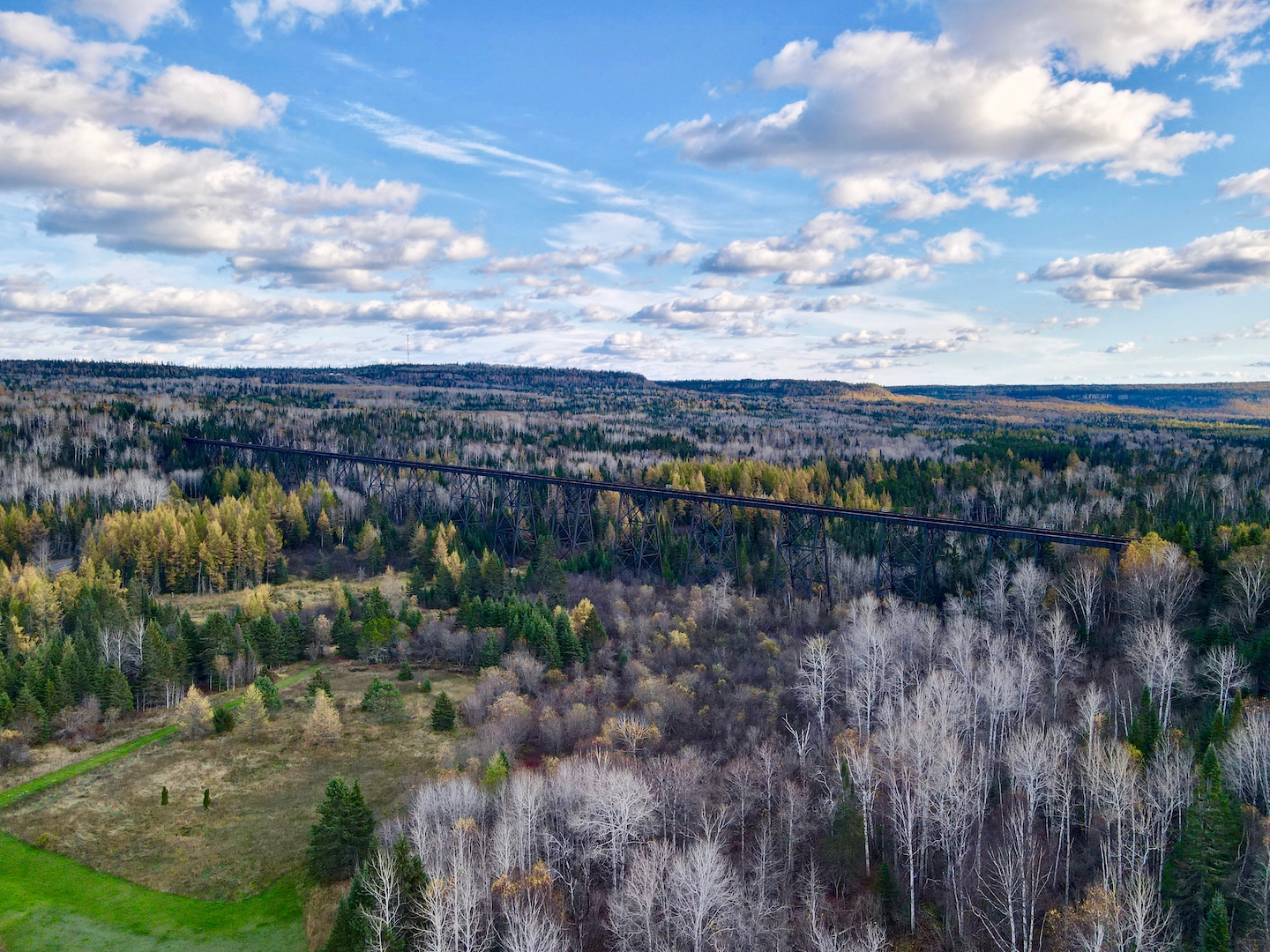
Some of the hikes involved redoing areas that I had covered in the past, either to improve the video or relay information that was not available when I first started exploring the Kinghorn. I also was out a lot with the drone, which really helps convey some of the detail about the line that you cannot see from the air. One of the big projects of the year was to finally finish the video about the Macdiarmid Tunnel, which I had started back in 2021. I had to record it twice, since I found out that my newer GoPro camera (Hero 9) doesn’t do as well in dark conditions as my old GoPro (Hero 7). You can check out some of my drone shots and the tunnel video below.


While I’m patiently biding my time until I can get out hiking again, I have turned my attention to a project that has been put on the back-burner for quite some time. My planned book on the Pigeon River Lumber Company/Gunflint & Lake Superior Railroad is still alive, but because of Covid, I was not able to do some research to complete the book. In the fall, I received an email from the Thunder Bay Historical Museum Society regarding the progress of the book, indicating they might be interested in publishing it. I had done a little bit of digging while I was off in the spring, but I really needed to get to the Archives of Ontario in Toronto and hopefully into Minnesota for some archaeological work. Over Christmas, I cleaned up a few things and then sent in a proposal to the historical society for them to have a look at. With any luck, I’ll be able to head down to Minnesota in the spring and I’ll have to figure the whole Toronto situation. Ideally, I’d like to get the book completed next winter.
Anyway, it’s time to move on. I’ll be back soon, I promise. As I indicated earlier, I have the trip to Italy coming up in March, so I’ll definitely have a post before and during our time there. Until then…



 Poverty, Agony, Distress & Want!